FertiAxis
China
Contact us

Fertilizer sourcing scope

NPK Fertilizers

Supplier identification and commercial coordination for defined NPK formulations and destination-market requirements.

Discuss a requirement ↗
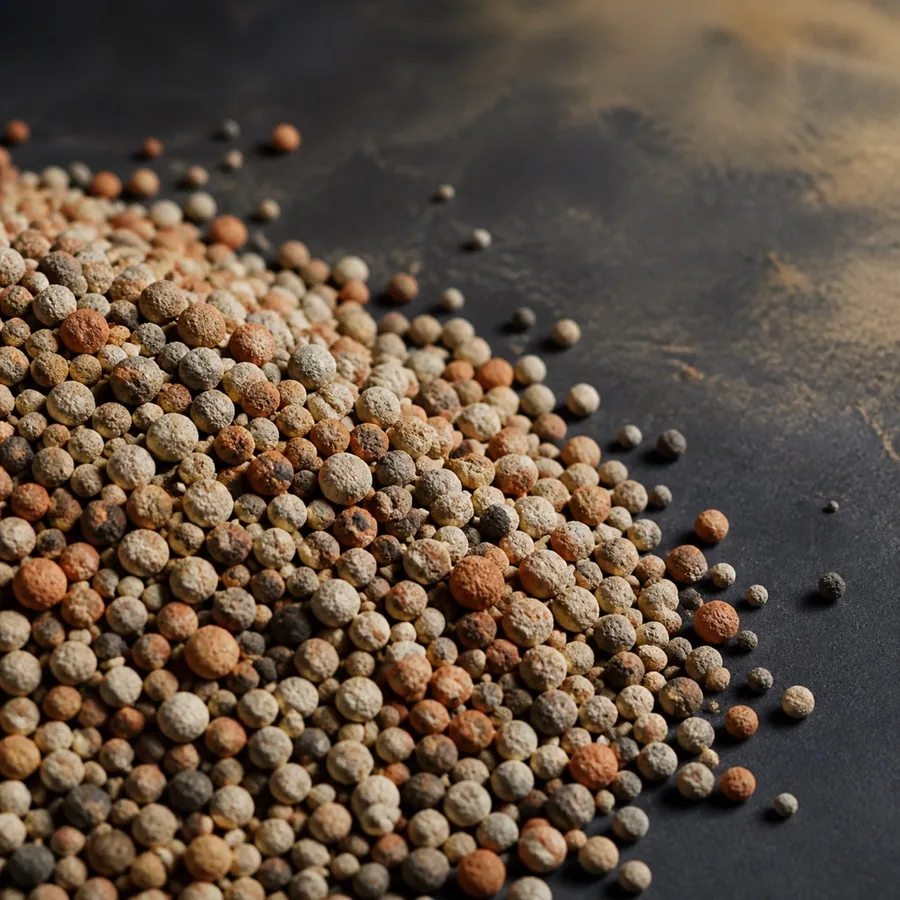
Representative close-up of blended NPK fertilizer granules
Representative image — not a specific batch, offer or indication of current stock.

Buyer checklist

Define these points before supplier outreach.

  • N-P₂O₅-K₂O ratio and nutrient forms
  • Compound or bulk-blended product
  • Crop, application and chloride sensitivity
  • Bag design, registration and shipment volume

Availability and quotation are confirmed only after review of a complete buyer requirement.

Procurement snapshot

Three decisions that shape the enquiry.

01

Formula basis

NPK grades are normally written in the order N–P₂O₅–K₂O. Nutrient form and solubility still need separate definition.

02

Process decision

Compound fertilizer and bulk blend can carry the same headline grade but differ in granule composition and segregation risk.

03

Application decision

There is no universally best formula; soil, crop, placement method and local registration determine fit.

Product decisions

Compound fertilizer or bulk blend?

The same printed ratio can represent materially different physical products.

Decision pointCompound / complexBulk blend
ConstructionNutrients are combined through a production processSeparate fertilizer granules are physically mixed
UniformityEach granule is generally intended to carry the formulated nutrient profileUniform field delivery depends on blend and particle compatibility
Key checksAssay, nutrient forms, granule size, strength and moistureComponent identity, blend uniformity, size compatibility and segregation
Commercial implicationFormula changes may require a dedicated production runCan offer formulation flexibility but needs disciplined blending and handling

Specification framework

Turn the product name into measurable acceptance criteria.

01

Guaranteed analysis

Total N, available phosphate as P₂O₅ and soluble potash as K₂O, plus nutrient forms and test methods required by the market.

02

Nutrient sources

Define chloride or sulphate potash basis, nitrogen forms, secondary nutrients, micronutrients, coatings or inhibitors where relevant.

03

Physical quality

Moisture, particle-size distribution, granule strength, dust, caking, appearance and bulk-blend uniformity.

04

Use case

Crop, soil or growing medium, application method, timing and any chloride sensitivity should guide formulation—not headline ratio alone.

Execution

Packaging, inspection and shipment planning.

01

Packaging & marking

  • Standard or destination-specific lined woven bags
  • FIBC or bulk only where segregation and handling controls are suitable
  • Custom artwork requires label review, print approval and realistic production lead time
  • Confirm net weight, language, guaranteed analysis, instructions, batch code and responsible-party details

02

Inspection scope

  • N, P₂O₅ and K₂O with agreed nutrient forms
  • Moisture, particle-size distribution and strength
  • Blend uniformity and segregation checks where applicable
  • Secondary nutrients, micronutrients or coating claims if declared
  • Bag artwork, weight, batch coding and shipment sampling

03

Shipping method

  • Minimize repeated handling that can segregate bulk blends.
  • Confirm warehouse humidity control and stacking limits for bagged product.
  • For bulk cargo, agree hold cleanliness, sampling, trimming and discharge arrangements.

04

Typical document set

  • Commercial invoice and packing list
  • Transport document
  • Batch or shipment certificate of analysis
  • Certificate of origin when required
  • Registration, conformity or label support documents applicable to the destination

Buyer risk review

Typical issues to close before contracting.

Headline-ratio trap

Two 15-15-15 products may differ in nutrient forms, raw-material sources and physical performance.

Segregation

Poorly matched particles can separate during transport and application, especially in bulk blends.

Crop mismatch

Chloride content, nutrient release and application method may make a formula unsuitable for the intended crop.

Label approval delay

Custom claims or artwork can trigger regulatory review, corrections and additional lead time.

Reference basis · reviewed 9 September 2026

Technical examples are procurement reference points, not a universal specification. Final requirements should be written into the contract and checked against the destination rules.

Start a conversation

Have a specific fertilizer purchasing requirement?

Send only your company, product, required quantity and destination in the first message. We normally review the enquiry within 24 hours and reply in English or Chinese during China time.

WhatsApp FertiAxis China